Chemical sprays kill more than the pest.
Broad-spectrum pesticides don’t distinguish between insects that damage crops and those that pollinate them, prey on other pests, or keep soil healthy. Integrated pest management restores that balance.
What IPM actually is
Integrated pest management isn’t one technique — it’s a decision-making process. Monitor what’s actually on the crop, identify it correctly, weigh whether it’s doing enough damage to justify acting, then reach for the mix of tools that fits: biological control, cultural practices, resistant varieties, and – where it’s genuinely needed – targeted chemical use as the last option, not the first.
A calendar spray schedule skips every one of those steps. It treats every week the same, whether or not there’s a problem worth treating.
Why it matters
Spraying on a schedule, rather than in response to what’s actually there, causes three problems that compound each other. Pests build resistance to chemicals used repeatedly, so the same product works less over time. Broad-spectrum sprays kill the natural enemies – ladybirds, parasitic wasps, spiders – that would otherwise keep pest numbers down for free, making farmers more dependent on chemical inputs, not less. And they reduce the pollinators that horticultural crops rely on for yield, so a farmer can lose money protecting a crop from the very sprays meant to protect it.
We work directly with farmers and beekeepers across Botswana – visiting farms, identifying what’s actually causing damage, and recommending management that fits the problem rather than reaching for the sprayer by default. The goal isn’t zero pesticide use. It’s the right response, at the right scale, at the right time – so beneficial insects keep doing their part, and a farm can absorb a bad pest season without every natural check having already been wiped out.
How we work
Identify before you act
Most damage on a crop gets misdiagnosed at a glance — leaf curling can be a pest, a disease, or spray damage, and it isn’t always obvious which. Treat the wrong problem, and the real one keeps spreading while the money goes on a product that was never going to help. We confirm what’s actually causing the damage before recommending anything, on-site or from photos, using the same identification skills we teach in our workshops.
Match the response to the threshold.
Not every pest sighting justifies spraying. A few aphids on a leaf usually aren’t worth treating – the cost of the input can outweigh the damage they’d ever cause, and natural enemies often bring the population back down on their own. We weigh how much damage is actually likely before recommending action, not just whether a pest is present.
Protect the workforce you already have
Ladybirds, parasitic wasps, spiders, and pollinating insects are already working a farm for free — eating pests, laying eggs inside them, or carrying pollen between flowers. A broad-spectrum spray doesn’t distinguish between them and the pest it’s aimed at, so every round of unnecessary spraying quietly removes labour a farmer would otherwise have to pay for, or go without. Our recommendations are chosen to leave that workforce intact wherever possible.
Train the people on the ground
Farmers and farm staff who can recognise a pest, judge whether it’s a real threat, and know what to do about it need an outside call-out far less often. That’s the actual goal of every workshop and site visit — not to make a farm dependent on us, but to build enough in-house judgement that we’re only needed for the harder cases.
The IPM cycle
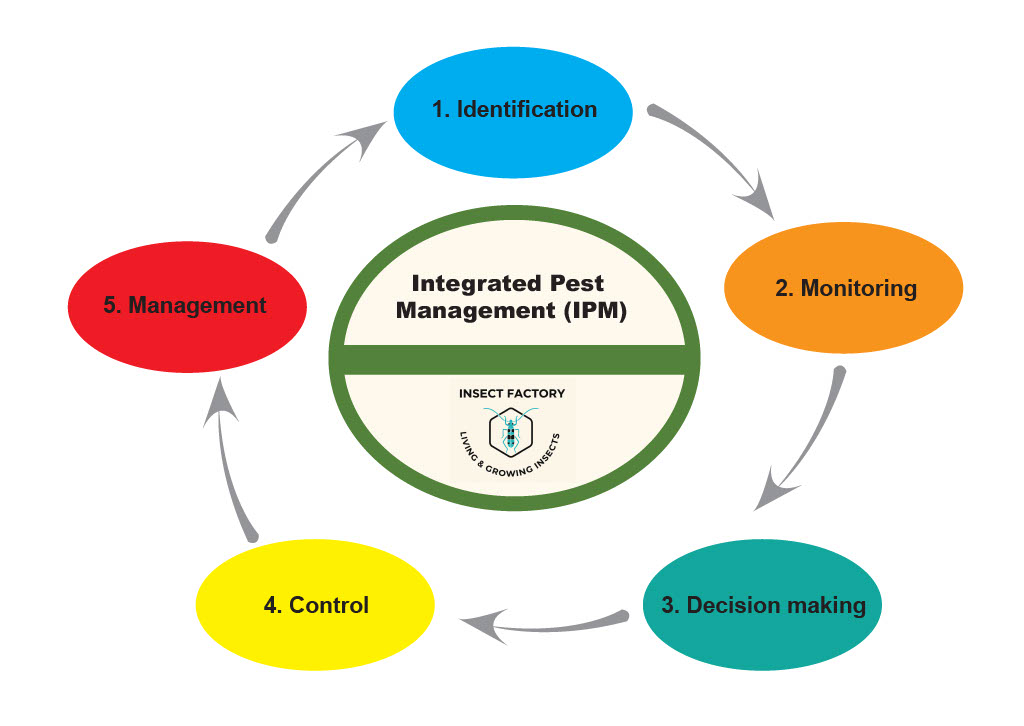
1. Identification
Confirm what’s actually on the crop — pest, beneficial insect, or something else entirely — before anything else happens.
2. Monitoring
Track how that population changes across repeat visits, not just a single snapshot — the trend matters more than any one count.
3. Decision-making
Weigh whether the damage or pest level actually justifies acting and what it would cost to intervene versus leave alone.
4. Control
Combine the tools that fit — biological control, cultural changes, targeted product use — matched to what’s actually there
5. Management
Fold the outcome back into an ongoing plan, feeding the next round of monitoring rather than treating it as a one-off fix.